Atomic Aquatics
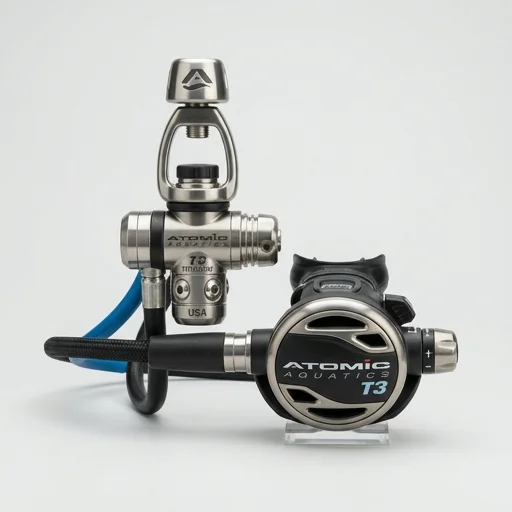
Atomic Aquatics T3
- Effortless breathing at depth
- Titanium corrosion resistance
- Sealed for cold water
As an Amazon Associate we earn from qualifying purchases.
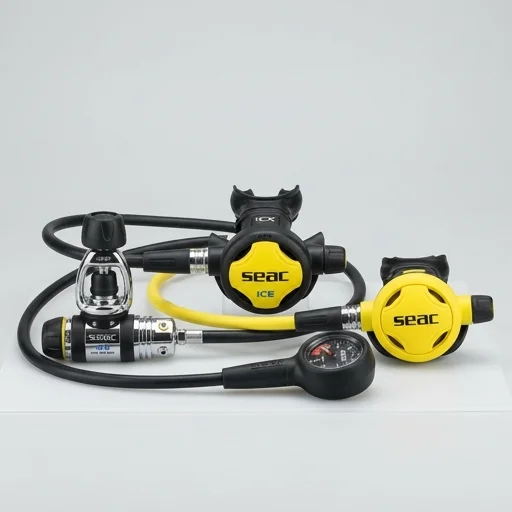
The Seac Ice is a solid, dependable regulator built specifically for cold and temperate water diving, offering a fully sealed first stage that keeps performance consistent even in near-freezing conditions.
| First Stage Type | Balanced piston, environmentally sealed |
|---|---|
| Ports | 5 low-pressure + 2 high-pressure |
| Minimum Water Temp | 2°C / 36°F |
| Second Stage Material | Technopolymer with adjustable knob |
| Weight | 920 g (first + second stage) |
Seac Ice Regulator is a regulator from Seac, rated 4.3 out of 5 and placed 30 of 32 in our regulators shortlist. Its defining number is weight: 920 g (first + second stage). It scores hardest on build quality (89/100) and softest on bench performance (62/100). The clearest advantage divers report: excellent performance in cold water and low visibility conditions.
The Seac Ice is a solid, dependable regulator built specifically for cold and temperate water diving, offering a fully sealed first stage that keeps performance consistent even in near-freezing conditions. While it doesn't quite match the refinement of top-tier brands, its balanced piston design, adjustable second stage, and competitive price make it a smart choice for divers who need reliable cold-water gear without breaking the bank.
The Seac Ice regulator stands as a testament to engineering designed specifically for the demands of cold water diving, earning its name from an environment where lesser equipment often fails. Built with a balanced diaphragm first stage, this regulator delivers consistent airflow regardless of tank pressure fluctuations or depth changes, making it a reliable companion for divers who venture into challenging thermal conditions. The first stage features an environmentally sealed design that prevents water and contaminants from entering the mechanism, a critical feature that guards against the freezing of internal components when water temperatures drop close to zero degrees. Seac has engineered this piece with over-sized passages and a heat-exchanging mass that draws warmth from the surrounding water to the regulator's core, actively working against the ice formation that gives the product its fitting name.
The second stage of the Seac Ice regulator complements the robust first stage with a pneumatically balanced valve system that ensures effortless breathing at any depth, reducing jaw fatigue during extended dives. Divers appreciate the adjustable venturi control and inhalation effort knob, which allow for fine-tuning the breathing resistance according to personal preference or specific diving conditions, whether in open water or under ice sheets. The exhaust tee has been designed to minimize bubble interference with the diver's field of vision while also dampening noise, an important consideration for divers who value a calm, focused underwater experience. Chrome-plated brass construction throughout the second stage housing provides durability against the corrosive effects of saltwater while maintaining a manageable weight that doesn't strain the jaw during long sessions.
Practical details round out the Seac Ice regulator's appeal to serious divers who require dependable gear for demanding environments. The hoses are reinforced to resist stiffening in cold temperatures, maintaining flexibility that supports natural movement even when water conditions turn harsh. A swiveling turret on the first stage allows hoses to be routed according to the diver's configuration preferences, whether for technical setups or standard recreational dives, reducing strain on connection points over repeated use. Compatible with both DIN and yoke tank valve systems depending on the configuration purchased, the Seac Ice regulator accommodates a range of diving setups, making it a versatile choice for those who split their diving between temperate recreational waters and the more punishing conditions of cold, ice-covered dive sites where equipment reliability becomes a matter of safety rather than mere convenience.